
Seoul Lotus Lantern Festival 2026: Your Yeondeunghoe Guide
Few travel experiences are as visually arresting as standing on Jongno Street on a May evening while thousands of glowing lotus lanterns drift toward you out of the dusk.
Quick Overview
What this guide covers: Everything you need to experience Seoul's Lotus Lantern Festival (Yeondeunghoe) in 2026 — dates, the parade route, best viewing spots, and how to make a full weekend of it.
- Main parade: Saturday, May 16, 2026, 7:00–9:30 PM along Jongno Street
- Route runs ~3 km from Heunginjimun Gate (Dongdaemun) to Jogyesa Temple
- Admission is completely free — no tickets required for any event
- Arrive by 5:30 PM to secure a good spot before the parade begins
Read time: 7 minutes
What Is Yeondeunghoe — and Why It's Worth Your Time
Yeondeunghoe (연등회), the Lotus Lantern Festival, is one of Korea's oldest living traditions. It celebrates Buddha's Birthday — the 8th day of the 4th lunar month — and has been observed for roughly 1,200 years, tracing back to the Silla dynasty. In 2020, UNESCO recognized it as an Intangible Cultural Heritage of Humanity.
In 2026, Buddha's Birthday falls on Sunday, May 24, with the public holiday observed on Monday, May 25. The main festival, however, happens the weekend before: May 16–17.
Don't let the religious framing put you off if Buddhism isn't your background. This is a full street celebration — fire-breathing dragon floats, more than 10,000 participants in hanbok, traditional drumming ensembles, and hundreds of thousands of lanterns turning central Seoul gold. Non-Buddhists are explicitly welcome, and the atmosphere is closer to a massive outdoor festival than a solemn ceremony.
The lotus lantern has carried specific symbolism throughout Korean history: each lit lantern represents a wish for well-being sent out into the world. That tradition of collective intention, visible on the faces of the people carrying lanterns through the streets, gives the whole event an emotional weight that photographs don't fully capture.
If you're building a broader cultural itinerary for your visit, the Ultimate Guide to Korean Cultural Experiences in 2025 covers a range of activities worth stacking alongside the festival weekend.
The 2026 Lotus Lantern Parade: Route, Timing, and Where to Stand
The centerpiece of the entire festival is the Grand Lantern Parade on Saturday, May 16, running 7:00 to 9:30 PM. The procession covers approximately 3 kilometers along Jongno Street, starting at Heunginjimun Gate (Dongdaemun) in the east and ending at Jogyesa Temple to the west.
Before the parade, the Eoulim Madang opening ceremony takes over Dongguk University Stadium from 4:30 to 6:00 PM. It features sutra chanting, a baby Buddha bathing ritual, and traditional music and dance. Attending gives the evening real context — and it's free.
The parade itself is unlike most processions you've seen. Sections of the route go quiet just before a float rounds a corner, then the drumming kicks back in and a 10-meter lit dragon appears. Lantern carriers move in formation wearing traditional dress, followed by floats representing different Buddhist temples from across the country. The scale builds progressively as the procession moves west toward Jogyesa.
Best viewing spots along the buddha's birthday parade route:
- Jonggak Intersection — central on the route, good sightlines in both directions, and a short walk from Jonggak Station (Line 1)
- Around Jongno 3-ga — slightly less packed than the Jonggak area while still offering strong views
- Near Gwanghwamun — visually dramatic with the palace gate as a backdrop, but this spot fills up early
- Jogyesa Temple entrance — where the parade ends and the energy peaks; also the most crowded position on the route
The one rule that matters most: be in position by 5:30–6:00 PM. Latecomers are stuck watching over shoulders. The parade starts at 7:00 PM sharp.
After the procession wraps, the Daedong Hanmadang post-parade party runs at Jonggak Intersection until 11:00 PM — spontaneous street dancing, drumming circles, and the kind of collective joy you can't manufacture. Most people leave before this and miss the best part of the night.
The Full Festival Weekend: Sunday Events and Slower Moments
The Lotus Lantern Festival experience extends well beyond Saturday night. Sunday, May 17 brings a full day of activity concentrated around Jogyesa Temple and the surrounding Insadong neighborhood.
From noon to 6:00 PM, look for:
- Lantern-making workshops — craft your own lotus lantern to carry in the Sunday evening procession (₩5,000–₩15,000 depending on size; register weeks in advance at llf.or.kr/eng)
- Traditional cultural performances, circle dances, and communal singing
- Temple food tastings — monastic Buddhist cuisine, vegetarian and quietly excellent
- Hanji (traditional Korean paper) making demonstrations and rice cake workshops
The Yeondeungnori — lantern games and a closing mini-parade — runs Sunday evening from 7:00 to 9:00 PM around Jogyesa. It's smaller and less produced than Saturday's main event, but it has an intimate neighborhood energy that makes it worth staying for.
Between events, Jogyesa Temple is free to enter year-round and worth exploring slowly. The Cheonggyecheon Stream nearby has lantern installations visible after dark throughout the festival period — a good option if the main crowd density isn't your preference.
Seoul's spring calendar is full in May. For ideas on what to do on the days surrounding the festival, Beyond K-Pop: Top 11 Unique Korean Experiences That Captivate Foreign Visitors highlights some of the city's best non-touristy activities worth pairing with the weekend.
How to Prepare: Tips for First-Time Visitors
Getting there: Don't attempt to drive. Road closures during the parade make it chaotic, and useful parking doesn't exist near the route. Take the subway:
- Dongdaemun Station (Lines 1 & 4, Exit 8) for the parade's starting point at Heunginjimun Gate
- Jonggak Station (Line 1, Exit 3) for mid-route viewing and the post-parade Daedong Hanmadang
- Anguk Station (Line 3, Exit 6) for the Jogyesa Temple area and Sunday events
- Jongno 3-ga Station (Lines 1, 3, 5) for flexible mid-route access
For a full breakdown of Seoul's subway system and T-money cards, the Complete Guide to Seoul Transportation 2025 covers everything before you arrive.
Getting out: After 9:30 PM, subway platforms near the route become seriously congested. Either leave by 9:00 PM or wait it out in one of Insadong's cafés or pojangmacha (street food stalls) until around 11:00 PM when crowds naturally ease.
What to bring:
- Layers — May evenings drop to 10–14°C, noticeably cooler than the daytime 17–22°C
- Cash for food vendors and workshop fees (many vendors don't accept cards)
- A portable phone charger — you'll be shooting photos for two to three hours straight
- Comfortable walking shoes; you'll cover 3–5 km across the evening
Photography etiquette: Cameras and phones are welcome throughout the parade and outdoor events. If you step into a temple during an active ceremony, put the phone away and read the room.
Many visitors in Seoul for the Yeondeunghoe weekend also book a K-Pop dance class at AZIT Dance Studio near Gyeongbokgung — a short walk from Jogyesa — as a way to round out the Sunday with something high-energy after two days of cultural immersion.
Practical Info
| Detail | Info |
|---|---|
| Main Parade | Saturday, May 16, 2026 — 7:00–9:30 PM |
| Opening Ceremony (Eoulim Madang) | Saturday, May 16 — 4:30–6:00 PM, Dongguk University Stadium (Line 2, Exit 6) |
| Post-Parade (Daedong Hanmadang) | Saturday, May 16 — 9:30 PM–11:00 PM, Jonggak Intersection |
| Sunday Cultural Events | May 17 — 12:00–9:00 PM, Jogyesa Temple area |
| Buddha's Birthday Ceremony | Monday, May 25 — 10:00 AM, all Buddhist temples nationwide |
| Admission | Free — lantern workshops ₩5,000–₩15,000 (~$3.50–$11 USD) |
| Parade Route | Heunginjimun Gate → Jongno Street → Jogyesa Temple (~3 km) |
| Key Subway Stations | Jonggak (Line 1), Anguk (Line 3), Jongno 3-ga (Lines 1/3/5) |
| Official Website | llf.or.kr/eng |
Last verified: 2026-04-03
Common Questions
Do I need to be Buddhist to attend? Not at all. The festival explicitly welcomes visitors of all religions and backgrounds. The vast majority of tourists in the crowd have no connection to Buddhism — they're there for the light, the music, and the atmosphere, and that's entirely the point.
Can I join the parade, or is it just for watching? You can participate. The Eoulim Madang ceremony on Saturday afternoon includes a public procession section open to everyone. If you attend the Sunday lantern-making workshops, you'll carry your own handmade lotus lantern in the Yeondeungnori procession at 7:00 PM. Book workshop spots in advance at llf.or.kr/eng — they fill up weeks ahead.
Is this manageable with young children? Yes — the main viewing areas along Jongno are flat and generally accessible, and the festival is family-friendly throughout. Kids tend to be captivated by the dragon floats and the sheer density of glowing lanterns. Bring snacks, claim your spot early, and have an exit plan for after the parade, when navigating crowds with a stroller gets tricky.
Related Articles
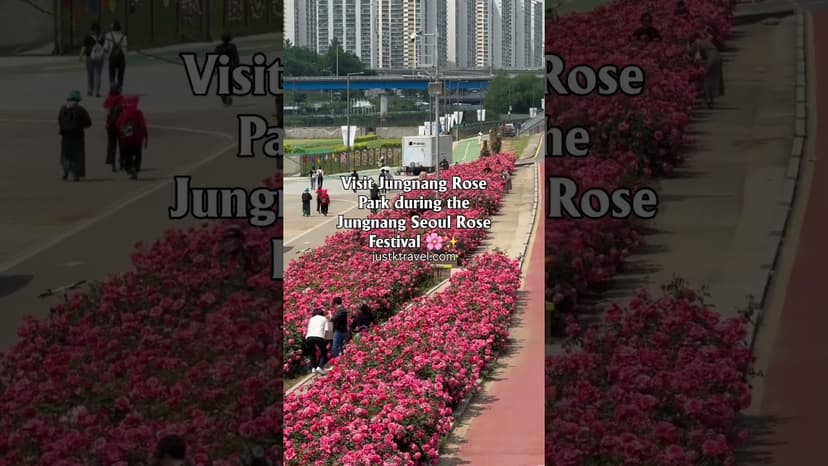
Seoul Rose Festival 2026: Complete Tourist Guide to Jungnang
Your complete guide to the 2026 Seoul Rose Festival — 5.45km rose tunnel, 10 million blooms, free entry, and practical tips for tourists.

I.O.I LOOP 2026: Seoul 10th Anniversary Fan Guide
I.O.I reunites after 9 years for 'LOOP' — Seoul concerts May 29–31 at Jamsil. Group history, dance legacy & fan pilgrimage guide for tourists.
Ikseon-dong Seoul: K-Pop Fan's Photo & Café Guide 2026
Discover Ikseon-dong, Seoul's hanok village — rainbow umbrella alleys, lantern cafés, K-pop vibes, and top photo spots just 10 min from Gyeongbokgung.
Popular Topics
Ready to Experience K-Pop Dance?
Join us at AZIT Dance Studio for an unforgettable K-Pop dance experience in Seoul!