Complete Guide to Seoul Transportation 2025: T-money, Subway Apps & Getting Around
Navigating a new city's transportation system can be intimidating, especially when you don't speak the language. But here's the good news: Seoul has one of the most efficient, affordable, and foreigner-friendly public transportation systems in the world.
Whether you're heading to a K-Pop dance class in Hongdae, exploring palaces in Jongno, or shopping in Gangnam, Seoul's subway and bus network will get you there faster and cheaper than a taxi. With over 300 stations, English signage everywhere, and apps that work seamlessly, getting around Seoul is surprisingly easy once you know the basics.
This guide will walk you through everything you need to know: from getting a T-money card to using Korean map apps, understanding the subway system, and saving money on transportation. By the end, you'll be navigating Seoul like a local!
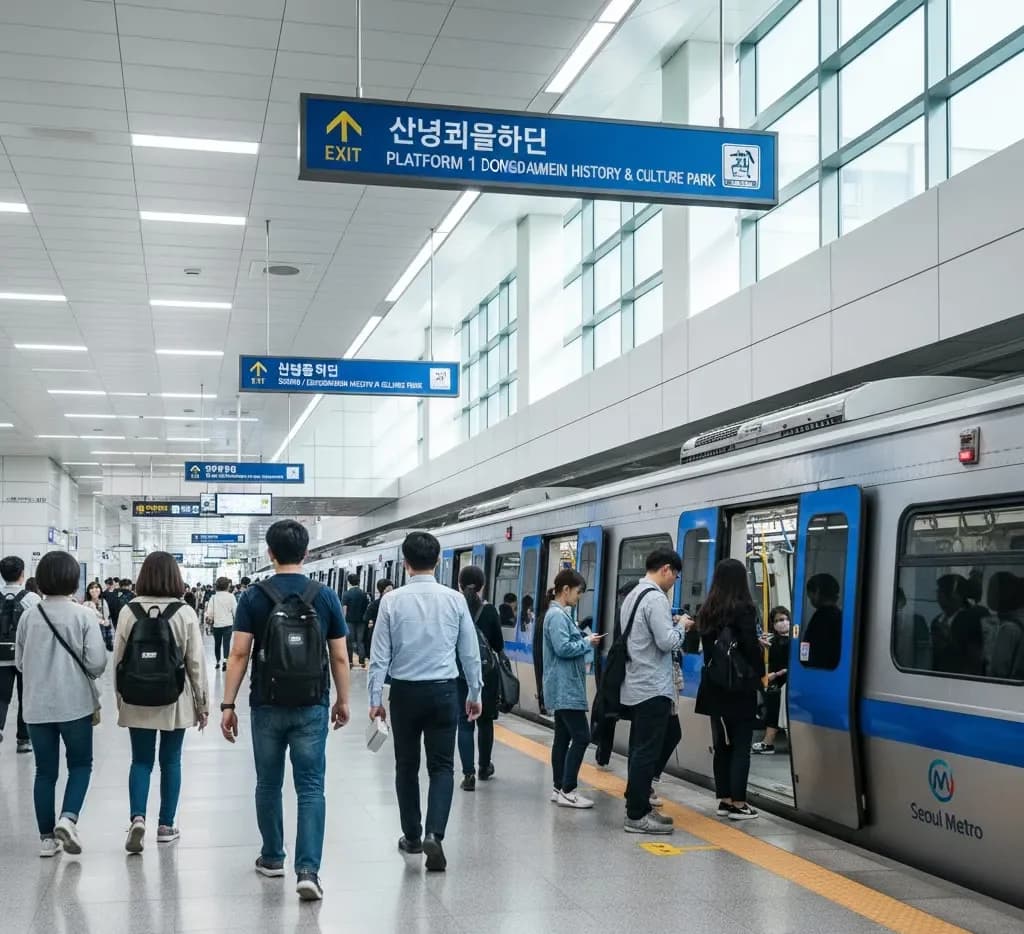
🎫 Step 1: Get Your T-money Card
The T-money card is your golden ticket to Seoul's public transportation. It's a rechargeable smart card that works on subways, buses, taxis, and even some convenience stores.
Why You Need T-money:
- Saves money: 100-150 won discount per ride compared to single-journey tickets
- Free transfers: Switch between subway and bus within 30 minutes at no extra cost
- No queue: Skip the ticket vending machine lines
- Universal: Works in other cities like Busan, Daegu, and Incheon
Where to Buy:
- Convenience stores (CU, GS25, 7-Eleven): Just ask for 'T-money card' - they cost ₩2,500-5,000 depending on design
- Subway stations: At vending machines or customer service centers
- Incheon Airport: Convenience stores in arrival halls
How to Recharge (Top Up):
You can add credit to your T-money card in multiple ways:
- Convenience stores: Hand your card to the cashier and say the amount (e.g., '만원' man-won = 10,000 won)
- Subway vending machines: Look for machines with English option, tap 'Recharge T-money', insert card and cash
- Mobile apps: Some cards support app-based recharging via NFC
💡 Pro tip: Load ₩20,000-30,000 at once to avoid frequent top-ups. Average subway ride costs ₩1,400-2,000.
🚇 Step 2: Master the Seoul Subway
Seoul's subway network is massive - 23 lines, 300+ stations, covering virtually every corner of the city. But don't worry, it's incredibly well-organized and easy to navigate.
Understanding the System:
- Color-coded lines: Each line has a color and number (e.g., Line 2 = Green circle)
- Station numbers: Every station has a unique code (e.g., Hongik University = 239, meaning Line 2, station 39)
- English everywhere: Announcements, signs, and maps all have English
- Transfer stations: Major hubs like Gangnam, Seoul Station, and Jongno 3-ga connect multiple lines
How to Ride:
- Find your line: Use Naver Map or Kakao Map (more on this below) to plan your route
- Check the direction: Look at the last station name on your line (e.g., 'toward Sinseol-dong' or 'toward City Hall')
- Tap in: Touch your T-money card on the blue sensor at the gate
- Find the right platform: Follow signs with your line number and direction
- Board the train: Wait behind the yellow safety line, let people exit first
- Tap out: Touch your T-money card again when exiting - IMPORTANT: You must tap out or you'll be charged the maximum fare
Finding the Right Exit:
Major stations have 10-15 exits. Using the wrong one can mean a 10-minute detour! Your map app will tell you which exit number to use (e.g., 'Exit 9'). Look for large numbered signs inside the station.
💡 Pro tip: Take a photo of the subway map at each station - it shows nearby landmarks and which exit to use.
📱 Step 3: Download Essential Map Apps
Google Maps doesn't work well in South Korea due to security regulations. You MUST use Korean map apps for accurate directions.
Option 1: Naver Map - RECOMMENDED
- Download: iOS App Store / Google Play Store
- Language: English available in settings
- Best for: Public transportation routes, walking directions, real-time bus arrival
- Key features: Shows exact exit numbers, transfer walking time, first/last train times
Option 2: Kakao Map
- Download: iOS / Android
- Language: Limited English (mostly Korean)
- Best for: Finding cafes, restaurants, and local businesses
- Integration: Works with Kakao T (taxi app)
[IMAGE: Naver Map app showing subway route with exit numbers and transfer times]
How to Use Naver Map for Subway:
- Open Naver Map app
- Type your destination in English or Korean
- Tap the blue 'Route' button
- Select 'Transit' (subway/bus icon)
- Choose your preferred route - it shows travel time, transfers, and cost
- Tap 'Details' to see step-by-step directions with exit numbers
🚌 Step 4: Understanding Seoul Buses
Seoul buses can seem intimidating at first, but they're faster than the subway for certain routes and give you a better view of the city. Plus, they use the same T-money card!
Bus Types (Color-Coded):
- Blue buses: Long-distance express routes connecting major areas
- Green buses: Local routes within neighborhoods (shorter distances)
- Red buses: Express buses to satellite cities outside Seoul
- Yellow buses: Circular routes around specific districts
- Night buses (N-buses): Run from midnight to 5am (e.g., N13, N37)
How to Ride:
- Find your bus: Use Naver Map to see which bus goes to your destination
- Check arrival time: Naver Map shows real-time bus locations ('2 minutes away', 'arriving now')
- Wave to board: Stand at the bus stop and raise your hand when you see your bus
- Tap in: Touch T-money card on the sensor near the driver as you enter
- Press the stop button: When you hear your stop announced (in Korean and English)
- Tap out: Touch your card again when exiting through the back door
💡 Pro tip: Night buses are a lifesaver if you're out late in Hongdae or Gangnam. They cost slightly more (₩2,150) but run when the subway is closed (after midnight).
🚕 Step 5: Using Taxis and Kakao T App
Taxis are affordable and convenient, especially when traveling with luggage or late at night. Seoul taxis are safe and metered, but using the Kakao T app makes everything easier.
Taxi Types:
- Regular (silver/white): ₩4,800 base fare (first 2km), most common
- Deluxe (black): ₩7,000 base fare, larger cars, English-speaking drivers
- International taxi: Pre-bookable, English/Chinese/Japanese speaking drivers
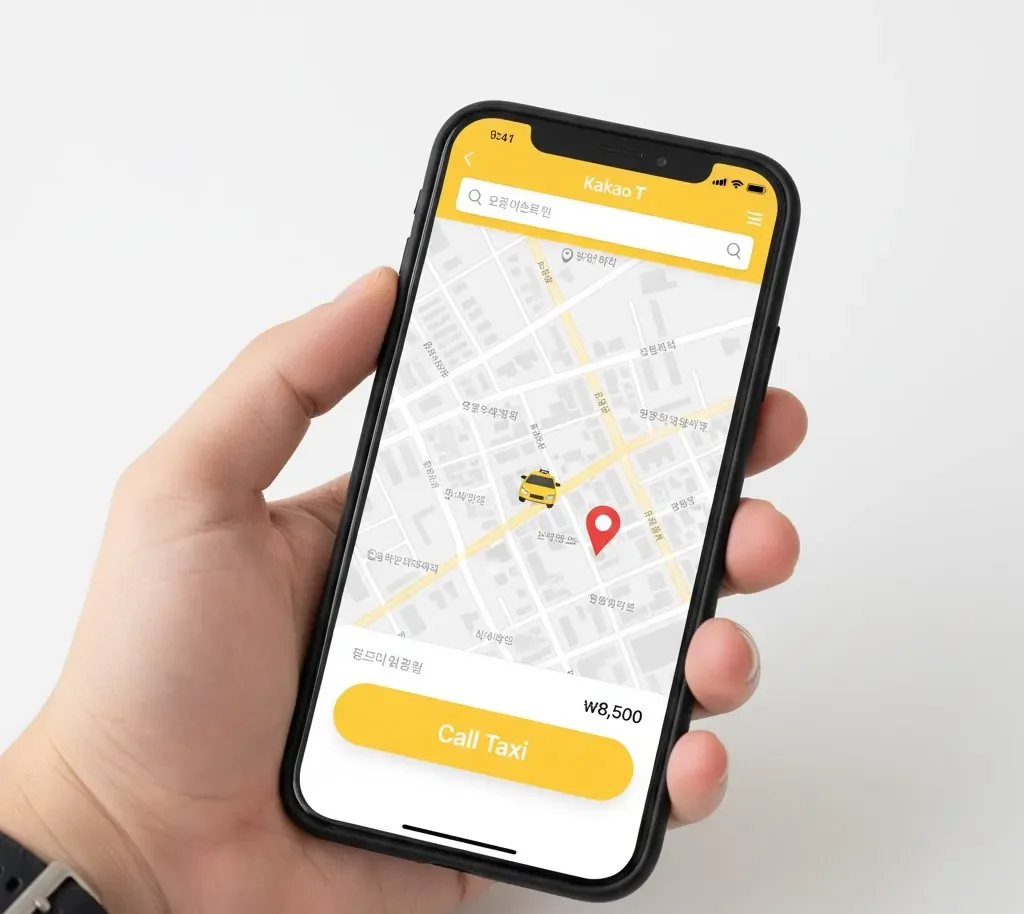
Kakao T App (카카오T):
Think of it as Korea's Uber. It's the easiest way to call a taxi without speaking Korean.
- Download: Kakao T from App Store/Play Store
- Sign up: Use your phone number (Korean or international)
- Set pickup location: App detects your GPS automatically
- Enter destination: Type in English or Korean (app translates)
- Call taxi: Driver accepts within 1-2 minutes
- Payment: Cash or card in the taxi (not through app)
💡 Pro tip: Taxis accept T-money cards! Just say 'T-money card' when paying. Some drivers prefer cash, especially at night.
✈️ Step 6: Getting from Incheon Airport to Seoul
Incheon Airport is about 60km from central Seoul. Here are your options:
Option 1: AREX (Airport Railroad Express) - FASTEST
- Express train: ₩11,000, 43 minutes direct to Seoul Station (no stops)
- All-stop train: ₩4,950 with T-money, 60 minutes, stops at Hongdae, Digital Media City, etc.
- Best for: Travelers staying near Seoul Station, Hongdae, or Gongdeok
Option 2: Airport Limousine Bus - MOST COMFORTABLE
- Cost: ₩17,000-17,000
- Time: 60-90 minutes (traffic dependent)
- Routes: Different bus numbers go to different areas (6001 for Gangnam, 6002 for Jongno, 6015 for Hongdae)
- Best for: Heavy luggage, direct hotel drop-off
Option 3: Taxi - MOST CONVENIENT
- Cost: ₩60,000-80,000 to central Seoul
- Time: 50-70 minutes
- Best for: Groups of 3-4 (split the cost), late-night arrivals
💡 Budget traveler tip: Take AREX all-stop train (₩4,950) then transfer to subway. Total cost under ₩7,000!
💰 Money-Saving Transportation Tips
- Use T-money for everything: 100 won discount per ride + free transfers add up quickly
- Transfer within 30 minutes: Switch from subway to bus (or vice versa) for free within 30 minutes of tapping out
- Walk between nearby stations: Sometimes walking 1 station (10 minutes) is faster than waiting for the train
- Avoid rush hours (7-9am, 6-8pm): Trains are packed, and buses get stuck in traffic
- Share taxis at night: Split costs with fellow travelers going the same direction
- Download offline maps: Save Naver Map routes offline in case of no internet
🎯 Final Thoughts: You're Ready to Explore Seoul!
Seoul's public transportation might seem overwhelming at first, but it's honestly one of the best in the world. With your T-money card, Naver Map app, and this guide, you'll be navigating the city like a local in no time.
Remember the essentials: Get a T-money card on day one, download Naver Map, always check your exit number, and don't forget to tap out. The rest will come naturally as you explore.
Whether you're heading to palaces in Jongno, shopping in Myeongdong, dancing in Hongdae, or eating your way through Gwangjang Market, Seoul's subway and buses will get you there safely, quickly, and affordably.
Have questions about getting around Seoul? Drop a comment below or visit us at AZIT Dance Studio in Hongdae - we're always happy to help travelers navigate the city!
Happy travels, and see you on the Seoul subway! 🚇✨
🎵 Getting to AZIT Dance Studio near Gyeongbokgung Palace
Now that you're a Seoul transportation pro, here's how to get to AZIT Dance Studio for your K-Pop dance class! Located in the historic Jongno district near Gyeongbokgung Palace, it's easily accessible by subway.
Address:
📍 4F, AZIT Studio, Heemyeong Building 25-3, Sajik-ro 12-gil, Jongno-gu, Seoul 03169 (Near Gyeongbokgung Palace)
How to Get There:
Option 1: Via Gyeongbokgung Station (Recommended)
- Take Line 3 (Orange) to Gyeongbokgung Station (경복궁역, Station #327)
- Use Exit 5 or Exit 6
- Walk 5-7 minutes west along Sajik-ro
- Look for Heemyeong Building - AZIT Studio is on the 4th floor
Option 2: Via Gwanghwamun Station (Alternative)
- Take Line 5 (Purple) to Gwanghwamun Station (광화문역, Station #533)
- Use Exit 2
- Walk 8-10 minutes northwest
Travel Time from Major Areas:
- Myeongdong: 15 minutes (Line 4 → Line 3 transfer at Chungmuro)
- Hongdae: 25 minutes (Line 2 → Line 3 transfer at Euljiro 3-ga)
- Gangnam: 35 minutes (Line 2 → Line 3 transfer at Euljiro 3-ga)
- Incheon Airport: 70 minutes (AREX to Seoul Station → Line 1 to Jonggak → Line 3 to Gyeongbokgung)
Using Naver Map:
Open Naver Map and search for 'AZIT Dance Studio' or enter the Korean address: 서울 종로구 사직로12길 25-3. The app will show you the exact walking route from the nearest subway exit.
💡 Pro tip: The Jongno area is Seoul's historic heart! Gyeongbokgung Palace, Bukchon Hanok Village, and Insadong are all within walking distance. Arrive early to explore traditional Korean culture before your dance class, or stay after to visit these iconic landmarks.
Nearby Attractions (All within 15 minutes walk):
- Gyeongbokgung Palace (경복궁): Korea's main royal palace, stunning traditional architecture
- Bukchon Hanok Village (북촌한옥마을): Traditional Korean houses, photo opportunities
- Insadong (인사동): Traditional tea houses, art galleries, souvenir shopping
- Gwanghwamun Square (광화문광장): Historic plaza with statues and events
📧 Exact directions: When you book your K-Pop dance class through our Airbnb Experience or website, you'll receive detailed walking directions with photos to help you find us easily!
Related Articles
Seoul Rose Festival 2026: Complete Tourist Guide to Jungnang
Your complete guide to the 2026 Seoul Rose Festival — 5.45km rose tunnel, 10 million blooms, free entry, and practical tips for tourists.

I.O.I LOOP 2026: Seoul 10th Anniversary Fan Guide
I.O.I reunites after 9 years for 'LOOP' — Seoul concerts May 29–31 at Jamsil. Group history, dance legacy & fan pilgrimage guide for tourists.
Ikseon-dong Seoul: K-Pop Fan's Photo & Café Guide 2026
Discover Ikseon-dong, Seoul's hanok village — rainbow umbrella alleys, lantern cafés, K-pop vibes, and top photo spots just 10 min from Gyeongbokgung.
Popular Topics
Ready to Experience K-Pop Dance?
Join us at AZIT Dance Studio for an unforgettable K-Pop dance experience in Seoul!