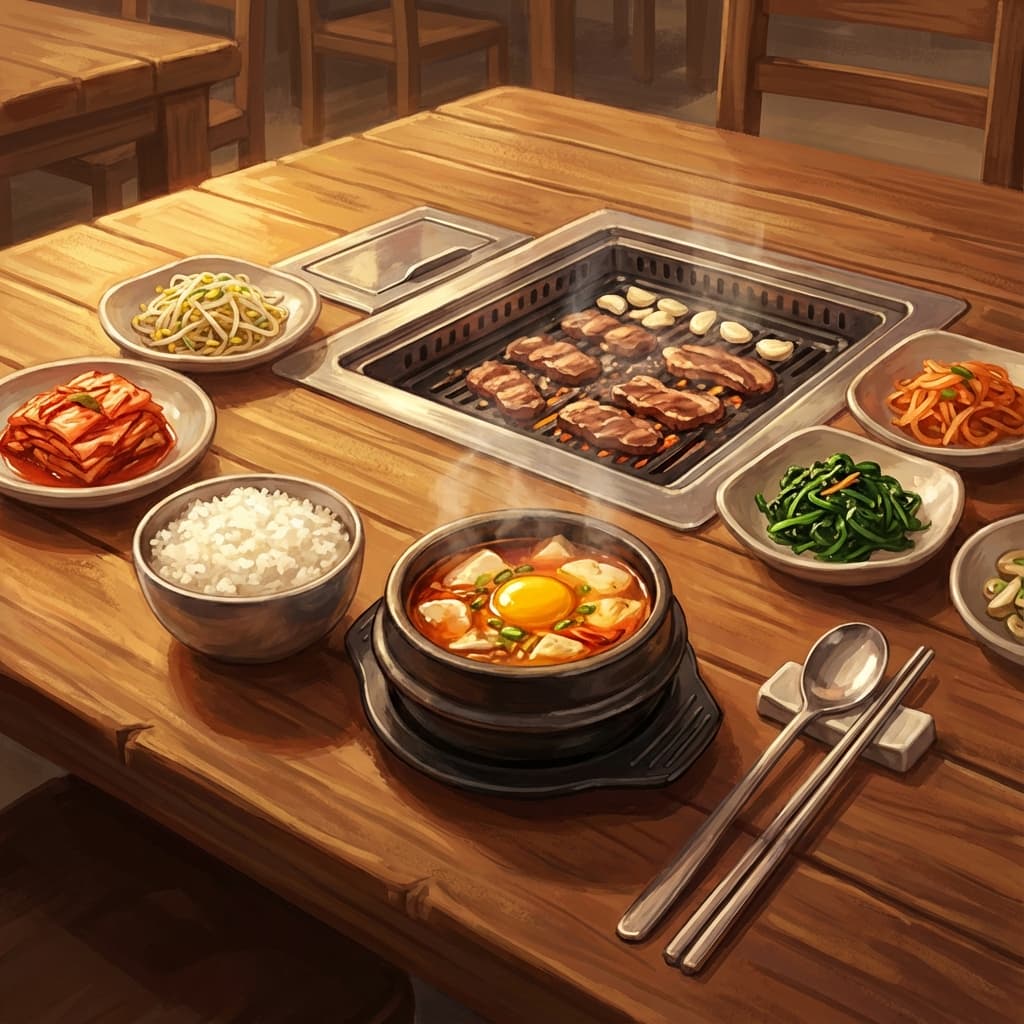
Korean Restaurant Ordering Guide: From Menu to Payment
Visiting a local restaurant is one of the best ways to experience Korean culture. However, for first-time visitors, the Korean dining system can be a bit confusing. From reading the menu to paying the bill, here is a perfect guide to help you dine like a local!
1. How to Read the Menu (Basic Food Words)
Korean menus often have pictures, but knowing a few basic words can be very helpful.
- Bap (밥): Rice. Usually served with most meals.
- Guk (국) / Tang (탕) / Jjigae (찌개): Soup or stew. Kimchi-jjigae (Kimchi stew) and Doenjang-jjigae (Soybean paste stew) are classics.
- Myeon (면): Noodles. Naengmyeon (Cold noodles) or Ramyeon (Instant noodles).
- Gui (구이): Grilled dishes. Samgyeopsal (Grilled pork belly) is a must-try.
- Bokkeum (볶음): Stir-fried dishes. Jeyuk-bokkeum (Stir-fried spicy pork).
- Banchan (반찬): Side dishes.
2. Ordering Expressions
When you are ready to order, you can call the server. Many restaurants have a call button (ding-dong sound) on the table. If not, you can raise your hand and say:
- "Yeogiyo!" (여기요!): "Over here!" (Used to call the server)
- "Igeo juseyo." (이거 주세요.): "Please give me this." (Point to the menu item)
- "Hana / Dul / Set juseyo." (하나/둘/셋 주세요.): "Please give me one / two / three."
- "Mul juseyo." (물 주세요.): "Please give me water."
Pro Tip: If you have dietary restrictions, use a translation app like Papago to communicate clearly.
3. Side Dish Culture (Banchan)
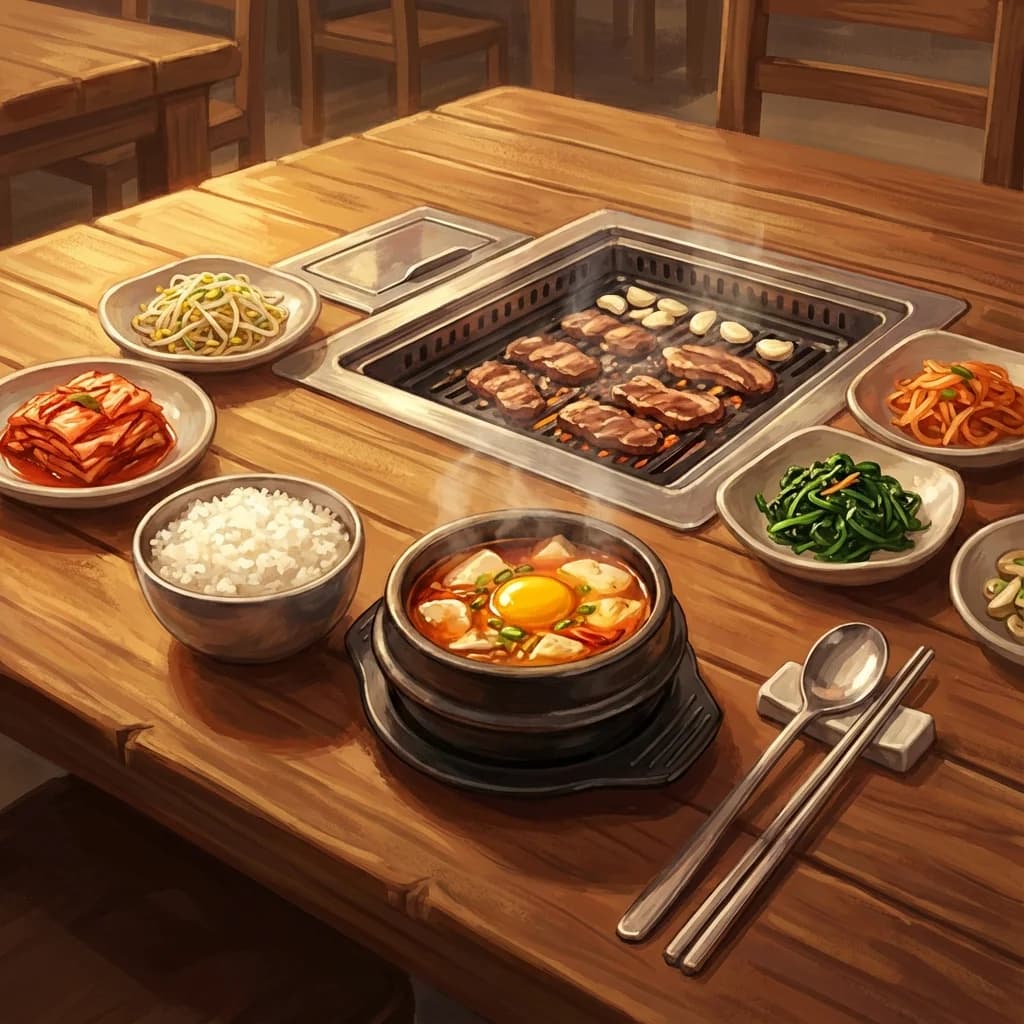
One of the most unique and generous aspects of Korean dining is Banchan.
- Free & Unlimited: Side dishes are free and often refillable. If you want more, just ask, "Deo juseyo" (Please give me more).
- Variety: Common side dishes include Kimchi, seasoned bean sprouts, spinach, and fish cakes.
4. Self-Service Culture
Don't be surprised if the server doesn't bring you water or cutlery immediately.
- Water: Look for a water dispenser or a fridge with water bottles. It often says "SELF" (셀프) in English.
- Cutlery: Spoons and chopsticks are usually found in a drawer under the table or in a container on top of the table. Napkins and bottle openers are often there too.
5. How to Pay
In most Korean restaurants, you do not pay at the table.
- The Bill: The server will leave a bill on your table, or they will keep track of your table number digitally.
- The Counter: When you are finished, take the bill (if there is one) to the counter near the exit to pay.
- Split Bill: "Dutch pay" is common among friends, but usually, one person pays the whole bill at the counter, and others transfer money later. However, you can ask to split the payment at the counter.
6. Tipping Culture
There is NO tipping in Korea.
The price you see on the menu is the final price (tax included). Leaving a tip can sometimes be considered rude or confusing. Just a polite "Jal meogeot-seumnida" (I ate well / Thank you for the meal) is enough.
7. Delivery Apps
Want to order food to your hotel or a park (like the Han River)?
- Baedal Minjok (Baemin) and Yogiyo are the most popular apps.
- Uber Eats is not widely used in Korea.
- Coupang Eats is also a good option and often has an English interface.
- Payment: Most apps accept foreign credit cards, or you can choose "Meet and Pay" (pay the rider directly) if that option is available.
Enjoy your delicious journey in Korea!
Related Articles
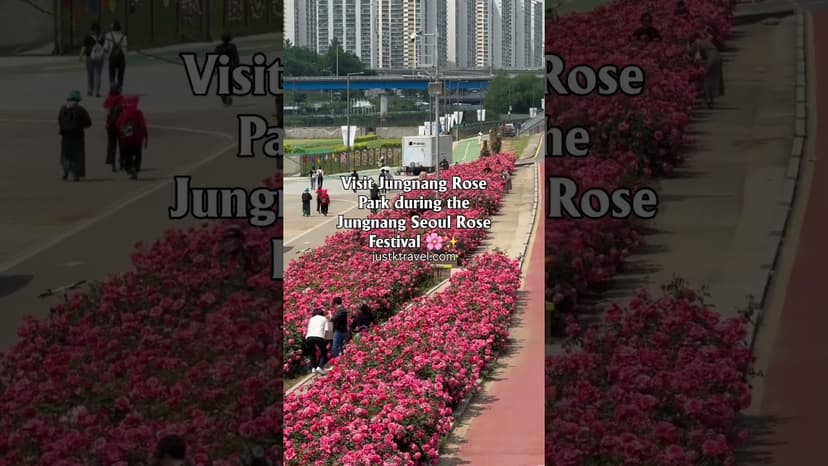
Seoul Rose Festival 2026: Complete Tourist Guide to Jungnang
Your complete guide to the 2026 Seoul Rose Festival — 5.45km rose tunnel, 10 million blooms, free entry, and practical tips for tourists.

I.O.I LOOP 2026: Seoul 10th Anniversary Fan Guide
I.O.I reunites after 9 years for 'LOOP' — Seoul concerts May 29–31 at Jamsil. Group history, dance legacy & fan pilgrimage guide for tourists.
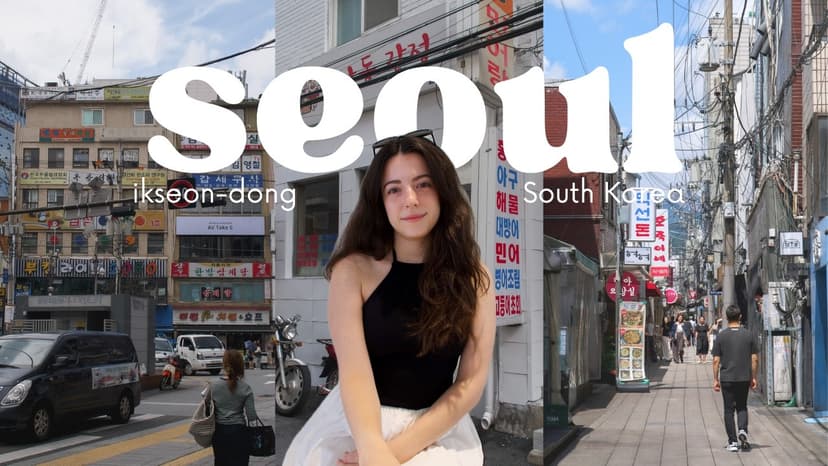
Ikseon-dong Seoul: K-Pop Fan's Photo & Café Guide 2026
Discover Ikseon-dong, Seoul's hanok village — rainbow umbrella alleys, lantern cafés, K-pop vibes, and top photo spots just 10 min from Gyeongbokgung.
Popular Topics
Ready to Experience K-Pop Dance?
Join us at AZIT Dance Studio for an unforgettable K-Pop dance experience in Seoul!